Ask the Master Distiller
Over the years, I’ve received hundreds of questions. From visitors at the distillery, bartenders, importers, journalists, and curious spirit lovers. Some are very practical, some deeply technical, and others philosophical. Often, they are questions that show a genuine desire to understand what’s in the glass.
On this page, I’ve collected a selection of those questions. Questions we’re asked regularly, questions that truly matter, and questions that give us the opportunity to explain how we work at Cadushy. Transparently, with respect for the craft, and without shortcuts.
The answers here are my answers. They’re based on my experience, intuition, and years of working with fermentation, distillation, and going in a tropical climate. Not because this is the only truth, but because this is how we do things, and why.
This page is not a closed chapter.
If you have a question that isn’t answered here, or if you’d like to go deeper into a specific topic, feel free to send me an email. I’m always happy to share knowledge, because for me, explaining the craft is just as important as practicing it.
Master Distiller
The Cadushy Distiller
The Craft - How spirits are made
Aging & Barrels
Choices, Transparency & Quality
The Spirits
Philosophy & Origins
What processes are involved in the beverage producing process?
Producing a spirit is a journey made up of several essential steps, and each one influences the final result.
Sourcing and Preparation:
It starts with ingredients and preparation. Choosing the right raw materials is crucial, because quality can never be added later. We source locally as much as we can. Beyond that, we source ingredients from all over the world, always aiming for sustainable and responsible sources whenever possible.
Fermentation:
This is where flavour is created. Yeast converts sugars into alcohol, but more importantly, it produces the flavour components that define the character of the spirit. If fermentation isn’t right, nothing that follows can truly fix it.
Distillation:
After fermentation comes distillation. Distillation is about refinement and selection. It concentrates alcohol and flavour, but it also requires careful decisions about what to keep and what to remove. This is where experience plays a big role.
Maceration:
For liqueurs, an additional step is maceration. Natural ingredients such as botanicals, spices, or peels are infused into alcohol over time. Maceration gently extracts flavour, aroma, and colour. Timing is crucial, because too short or too long will affect balance. This step gives liqueurs their depth and character.
Aging:
For many spirits, the next step is aging. Time in the barrel allows the spirit to interact with wood, oxygen, and climate. Harsh edges soften, flavours deepen, and complexity develops. On Bonaire, tropical aging accelerates this process significantly.
Blending and Finishing:
Once the spirit has reached the right balance, for some products there is blending and finishing. Different barrels or distillates may be combined to achieve harmony and consistency, or to create a specific expression.
Bottling:
Finally comes bottling. This is not just the end of the process, but the moment where the distiller decides the spirit is exactly where it needs to be. From that point on, the bottle preserves the spirit as it was intended to be enjoyed.
Tasting:
At every step, not just at the end, tasting plays a crucial role. It allows us to determine the progress of the process and steer it in the right direction.
Every step matters. Miss one, rush one, or misunderstand one, and it will show in the glass.
How important is water in your spirits, and where does it come from?
Water is very important, especially in the final stages of production. On Bonaire, our water is supplied by WEB and is produced through reverse osmosis from seawater. That means it’s extremely pure, very soft, and neutral in taste.
Because the water has no dominant character of its own, it allows the flavours of the spirit to remain exactly as we intend them. When we adjust alcohol strength before bottling, we want the water to support the spirit, not influence it. Clean, neutral water gives us control and consistency without interfering with flavour.
How does fermentation influence the flavour of your spirits?
Fermentation is the most important phase of the entire production process. This is where flavour is created. Distillation can refine flavours, but fermentation produces them.
During fermentation, yeast converts sugars into alcohol, but at the same time it creates a whole range of flavour components. Think of fruity notes, floral aromas, spicy tones, and complexity. Without the right fermentation, you simply cannot make great spirits, no matter how good your still is.
At Cadushy, we focus heavily on fermentation because this is the foundation of everything we do. If the fermentation is right, you already have the building blocks needed to create great drinks. If it’s wrong, you can’t fix it later. That’s why we treat fermentation with as much care and attention as distillation and aging.
How do you ferment rum at Cadushy?
We ferment our rum using molasses as the base. Molasses brings depth, richness, and natural sweetness, and it gives us a strong foundation to build flavour.
Our fermentation is medium to long. We don’t rush it, because time allows the yeast to do more than just produce alcohol. We use a specially selected yeast that helps create the flavour profile we’re looking for.
During fermentation, that yeast produces the flavour components we need to make a smooth and gently sweet rum. This is where the character of Rom Rincón is born. If the fermentation isn’t right, you’ll never get the balance and elegance you want later in distillation and aging. That’s why fermentation is so important to us. It sets the tone for everything that follows.
What is the difference between pot still and column still distillation, and which do you use at Cadushy?
We started with a pot still, and today we work with both pot still and column still distillation. Each has its own role, and choosing the right one is part of the craft.
Pot still distillation is more hands-on and expressive. It produces spirits with more character, texture, and depth. That’s why we use pot stills for spirits where flavour and personality really matter, like rum, whisky, gin, and our agave spirit. In many cases, we even combine pot still and column still distillation for these products. That gives us the best of both worlds.
With the column still, we can fine-tune the flavour profile very precisely. By adjusting the levers on the column, we control what comes through in the final spirit, lighter or fuller, cleaner or more expressive. It’s a powerful tool when you know how to use it.
For base alcohol used in our liqueurs and for vodka, we mainly rely on column distillation. It creates a clean, neutral foundation that allows flavours and botanicals to shine without interference.
In the end, it’s never about one method being better than the other. It’s about choosing the right technique for the spirit you want to create.
What are heads, hearts, and tails in distillation?
During distillation, the alcohol doesn’t come out all at once. The first part is called the heads, followed by the heart, and finally the tails.
The heart is what we’re after. That’s where the best flavours, balance, and purity are found. The heads and tails contain components we don’t want in our final spirit.
At Cadushy, we make our cuts very carefully. We deliberately choose quality over quantity. That means we may end up with a little less spirit, but what remains is cleaner, smoother, and more expressive. For us, quality always comes first.
What kind of barrels do you use?
We work with French oak barrels with thick staves. That’s a very deliberate choice, because thicker staves allow us to reuse the barrels over time and give us much better control over wood influence. We don’t want the wood to dominate the spirit. We want balance.
French oak is known for its elegance. It contributes flavours like soft vanilla, gentle spice, subtle toast, hints of clove and nutmeg, and refined tannins that add structure and mouthfeel without harshness. It supports the spirit rather than overpowering it.
Our barrels are medium toasted and medium charred. Medium toast brings out sweetness and aromatic complexity, while medium char adds depth and structure without introducing heavy smoke or bitterness.
We use barrels of 10, 30, and 200 liters. The smaller barrels allow for faster interaction between spirit and wood, while the larger barrels give us the time and patience to let flavours develop more slowly and harmoniously. Choosing the right barrel size is just as important as choosing the right oak.
What is the difference between toasting and charring?
Toasting and charring are two very different ways of treating the inside of a barrel, and they each influence the spirit in their own way.
Toasting is a gentle, controlled heating of the wood. It slowly breaks down the oak and releases aromatic compounds. This is where flavours like vanilla, caramel, light spice, and toasted bread come from. Toasting adds elegance and complexity. It’s about aroma and finesse.
Charring is more intense. The inside of the barrel is exposed to an open flame, creating a layer of charcoal. That charcoal acts as a natural filter, softening the spirit as it ages. Charring brings deeper notes like toasted sugar, cocoa, and a bit of structure, but without needing smokiness if you keep it moderate.
At Cadushy, we use medium toast and medium char because we want balance. The toast builds flavour, the char adds structure, and together they allow the spirit to mature without losing its own identity. The wood should guide the spirit, not take over.
What actually happens when a spirit ages in a barrel?
Aging is a conversation between the spirit, the wood, and time. Once the spirit goes into the barrel, it starts moving in and out of the oak as temperatures change. That movement allows it to extract flavour, colour, and texture from the wood.
At the same time, aging smooths the spirit. Sharp edges soften, aromas become rounder, and different flavour layers begin to connect. Oxygen slowly enters through the wood, helping the spirit mature and develop complexity.
At Cadushy, we age our spirits under tropical conditions. That means the process is more intense. In tropical aging, it is mostly the spirit itself that moves out of the barrel through evaporation. This concentrates the remaining liquid and accelerates flavour development.
We taste our barrels regularly. Aging isn’t about waiting for a fixed number of years, it’s about knowing when a spirit is ready. Sometimes that moment comes earlier than planned, sometimes it needs more time. When everything comes together, balance, depth, and harmony, that’s when we decide to bottle.
What is the Angel’s Share?
The Angel’s Share is the part of the spirit that naturally evaporates while aging in a barrel. Wood breathes. As the spirit rests inside, small amounts escape through the oak into the air. That loss is what distillers around the world call the Angel’s Share.
It’s not a mistake or a flaw. Without this evaporation, a spirit would never properly mature.
How big is the Angel’s Share on Bonaire?
On Bonaire, the Angel’s Share is significant. We age our spirits under tropical conditions, and that makes a real difference.
Here, we lose around 10 percent per year. In Europe, that number is typically around 2.5 percent per year. The warm climate accelerates evaporation considerably.
With tropical aging, it is mostly the spirit itself that moves out of the barrel. That may sound painful, and sometimes it is, but it also means the remaining spirit becomes more concentrated, richer, and more expressive in a shorter time.
We don’t see the Angel’s Share as a loss. It’s part of the exchange. The angels take their share, and what remains gains depth, character, and maturity.
How do you manage barrel aging in a tropical climate?
We age our spirits at tropical temperatures, which makes the process much more intense. Because of that, we actively monitor our barrels.
Every two months, we measure and taste all barrels. When a barrel drops below half full, we combine two barrels from the same batch into one full barrel. If a barrel gets too empty, evaporation can speed up dramatically, and an empty barrel is of no use to anyone.
By managing our barrels this way, we keep control over aging, evaporation, and quality, while making the most of tropical maturation.
Are your spirits chill-filtered?
No, we don’t chill-filter our spirits. Chill filtration removes certain natural compounds so a spirit stays perfectly clear when it gets cold. That may look nice in a glass, but those compounds also carry flavour and mouthfeel.
For us, flavour always comes first. Chill filtering would take away an important part of the flavour profile and texture of our spirits, and that’s not a compromise we’re willing to make.
If a spirit becomes slightly cloudy when chilled, that’s not a flaw. It’s a sign that it’s still complete, still natural, and still exactly as we intended it to be. We prefer character over cosmetic perfection.
Why are your liqueurs 20% and your spirits 40% alcohol?
We bottle our liqueurs at 20 percent alcohol because, in our opinion, that’s a very pleasant and balanced strength for a liqueur. It allows flavours to shine without becoming heavy or overpowering.
Our spirits are bottled at 40 percent. That level gives a spirit body, structure, and presence, while still being very drinkable. It’s strong enough to carry character, but not aggressive.
Our products are made to be enjoyed, not to get people drunk. Balance, flavour, and drinkability always guide our choices.
Why don’t you use age statements on your bottles?
Because age is just a number. And with spirits, it really is.
Some young spirits can taste fantastic, full of energy and character. And some old spirits can taste horrible. The common belief that older automatically means better simply isn’t true.
We don’t want people to be guided by a number on a label. We want them to taste for themselves. Balance, flavour, texture, and character matter far more than age alone.
At Cadushy, we bottle a spirit when it’s ready, not when a calendar says so. We trust our senses more than numbers, and we invite our guests to do the same.
Why can spirits from different batches taste slightly different?
Because we’re working with natural ingredients and real processes, not industrial formulas. Small variations are part of authentic distilling.
Things like fermentation behavior, temperature, yeast activity, and even the way a barrel breathes will never be exactly the same twice. Aging plays a role as well. Each barrel evolves in its own way, even when everything is done as consistently as possible.
We manage those differences carefully through tasting and blending, but we don’t try to erase them completely. A bit of variation means the spirit is alive. It shows that it was crafted, not manufactured. For us, consistency means staying true to the character of the spirit, not forcing every batch to be identical.
Can a spirit continue to age or change once it’s bottled?
Once a spirit is bottled, it no longer ages in the way it does in a barrel. Aging needs wood and oxygen, and in a sealed bottle those interactions stop.
That said, a bottled spirit can still change very slightly over time. Flavours may become more integrated and rounded, especially if the bottle is stored properly, away from light and extreme temperatures. But those changes are subtle.
The real maturation happens in the barrel. That’s why we take so much care in deciding when a spirit is ready to bottle. When it leaves the barrel, it should already be exactly where we want it to be. The bottle is there to preserve that moment.
How do you guarantee safety and quality in production?
Cadushy works with a food safety plan based on HACCP principles. This system helps us identify risks, control critical steps, and guarantee both safety and quality throughout the entire production process.
For us, quality and food safety are not separate topics. They go hand in hand. Every step we take is aimed at delivering products that are safe, consistent, and crafted to the highest standard. That responsibility is something we take very seriously.
How much do you produce yearly?
Our volume increases every year, but growth has never been our primary goal.
During the COVID pandemic, when the island came to a standstill, we invested heavily in the future. We expanded our production capacity with the manufacturing and installation of our new and largest still, new fermenters, and additional mixing tanks. That allowed us to grow without compromising quality.
In 2025, we produced approximately 48,000 bottles. For Bonaire, that is a significant volume. In the global spirits industry, it is still very small.
And that’s exactly where we are comfortable. We don’t chase mass production. Spirits decide their own pace. Aging, evaporation, blending, and tasting determine when a product is ready, not a production target.
Every bottle that leaves the distillery must meet our standards. If that means producing less, that’s a choice we’re willing to make.
Master’s Note:
Volume should always be the result of craftsmanship, never the starting point. If you respect the process, growth follows naturally.
What expressions of Rom Rincón do you make?
We make four expressions of Rom Rincón, each with its own character and purpose.
Our Premium expression is aged for a minimum of three years. It’s a very versatile rum. It even won a Trophy at the International Wine & Spirit Competition for Best Rum & Cola, but it’s also a beautiful sipping rum on its own. Balanced, approachable, and full of character.
Next is our Private Stock, aged for a minimum of six years. This expression is fuller and smoother, with more depth and roundness. It’s made for people who enjoy taking their time with a glass and exploring layers of flavour.
Then there is our Limited Edition. This one is blended by the Master Distiller from a selection of our oldest casks, combined with some younger barrels for balance and freshness. Every Limited Edition is different, because the recipe changes slightly each time. It’s about creativity and expression rather than repetition.
Finally, we make our First Edition. This is a very special expression, made from some of the very first Rom Rincón barrels that were distilled back in 2009, when everything started. It’s a piece of our history in liquid form.
Together, these four expressions tell the full story of Rom Rincón, from accessible and playful to deep, rare, and truly historic.
What inspired the Island Liqueurs line?
All Island Liqueurs are based on traditions from the Dutch Caribbean islands.
Before creating each liqueur, I travelled to the islands myself to do research. I wasn’t looking for flavours to copy, but for stories, traditions, and cultural roots that could be translated into a liqueur. Each island has its own identity, but there is also a shared Caribbean soul that connects them.
For Aruba, Curaçao, Bonaire, Statia, and Saba, we found traditions that inspired a liqueur. Each one became a liquid interpretation of that island’s heritage.
There was one exception: Sint Maarten. Despite extensive research, I couldn’t find a tradition that felt authentic enough to translate into a liqueur. And rather than forcing something, I chose a different path.
Instead of creating a liqueur for Sint Maarten, I created one for the Kingdom that binds the islands and the Netherlands together. And especially for the King and Queen of the Netherlands.
That became Orange of Orange Liqueur. A refined alternative to the traditional orange bitter that is traditionally drunk on the King’s birthday.
On October 30, 2011, when Willem-Alexander and Máxima visited Rincon, they tasted the liqueur, approved it, and took a bottle home with them. That moment gave the liqueur its true meaning and place within the Island Liqueurs line.
Master’s Note:
Not every idea needs to become a product. Sometimes, the most honest choice is knowing when not to make something.
How is Captain Don’s Whisky made?
Captain Don’s Whisky is made from three different types of grain: rye, corn, and sorghum. Each grain brings something unique. Rye adds spice and structure, corn brings softness and gentle sweetness, and sorghum gives depth and an earthy character.
During the process, the sorghum is smoked with peat. That adds a subtle smoky layer, not overpowering, but clearly present. It gives the whisky its distinctive edge and a quiet nod to traditional whisky-making, interpreted in our own way.
The whisky is aged for a minimum of three years in French oak barrels. During aging, we add Cuban tobacco leaves inside the barrel. This is a very deliberate choice. The tobacco contributes additional aromatic complexity, creating deep, warm notes that develop slowly over time.
Everything about Captain Don’s Whisky is about respect. Respect for the man, for the island, and for the craft. Nothing is rushed, and nothing is accidental. It’s a whisky built layer by layer, with character and purpose.
What expressions of Captain Don’s Whisky do you make?
We make two expressions of Captain Don’s Whisky.
The Premium expression is aged for a minimum of three years. It’s the core expression of the whisky, balanced and approachable, while still carrying the character and depth that define Captain Don’s name.
Then there is the Limited Edition. This expression is a blend of older and newer casks, selected and composed by the Master Distiller. Each Limited Edition is slightly different, depending on the casks available and the character we want to express at that moment. It allows us to explore complexity and creativity while staying true to the whisky’s identity.
Together, these two expressions show both sides of Captain Don’s Whisky: consistency and craftsmanship in the Premium, and creativity and exploration in the Limited Edition.
How did you start with Tripple B beer?
I always say: “Whisky is distilled beer.” So in theory, beer shouldn’t have been unfamiliar territory for me. And yet, for a long time, I had never actually brewed a beer myself.
Still, I had this persistent idea to create a beer that would truly fit Bonaire. A beer with character, rooted in craftsmanship, and inspired by classic brewing traditions. There was just one small problem: I had no hands-on experience in brewing beer.
Then one day, Wim walked into the distillery. Wim is an experienced brewer from Belgium, and he proposed something beautifully simple: why not develop a Bonairean beer together, using a Belgian base? That moment changed everything.
Together, Wim and I developed the recipe for Tripple B. Tripple B stands for Bonairean Belgian Beer. Belgian brewing knowledge on one side, Bonairean character on the other. While working on the recipe, I learned the tricks and techniques of brewing step by step. It wasn’t just about creating a beer, it was about understanding the process from the inside and shaping a genuine cross-ocean collaboration.
We chose a blond style because it’s balanced, expressive, and very drinkable in a tropical climate. It has character without being heavy, and depth without losing accessibility.
We introduced Tripple B during our 10-year anniversary celebration in 2019 and let the guests decide its future. Two bins were placed at the party: one labelled “Stop” and one labelled “Go On.” By the end of the night, the “Go On” bin was overflowing with empty Tripple B bottles. The “Stop” bin contained just one bottle. A Heineken. That moment told us everything we needed to know.
What is the difference between “Kadushi” and “Cadushy”?
Kadushi is the cactus. Its scientific name is Cereus repandus, and it’s the plant that inspired us to start this business in the first place. Kadushi is deeply rooted in Bonaire’s culture and traditions, and it was the original spark behind our first products.
Cadushy, on the other hand, is the brand of The Cadushy Distillery.
When we started the company, I wanted the name to stand out while still honoring that inspiration. And since my name is Eric, with a “c”, I simply liked the look of the letter “c” better than a “k”. It felt more elegant, more distinctive.
There was another detail as well. On Aruba, the cactus is often written as “Cadushi” with an “i” at the end. I felt that a “y” looked more graceful than an “i”, so we chose to end the name that way.
That’s how the brand name Cadushy was born. Today, Cadushy is a registered brand in multiple countries around the world, but it will always trace its roots back to the Kadushi cactus and the island that inspired everything we do.
Very simply put: Kadushi and Cadushi are the cactus. Cadushy is the spirits brand. The cactus inspired us. The brand grew from that inspiration.
Do you still use Kadushi to make your products?
For quite some time, we did. But since July 2022, we no longer use Kadushi cactus in our alcoholic beverages.
Around the world, awareness is growing when it comes to sustainable and ecological production. At Cadushy, we believe quality and responsibility should go hand in hand. That’s why we made a conscious decision to give nature conservation an even more important place in the production of our iconic Cadushy of Bonaire Liqueur.
Although Bonaire is blessed with an abundance of Kadushi cacti, we chose to stop using the plant itself. Today, the flavour of Cadushy of Bonaire Liqueur is created in a nature-friendly and sustainable way, using carefully selected alternatives. This allows us to preserve the essence and taste of Bonaire without placing pressure on this characteristic cactus.
From July 2022 onward, this ecological version became our standard. We have a deep love for the Kadushi cactus and feel a strong responsibility to help protect this unique part of Bonaire’s natural heritage. By using the flavour instead of the plant, we can safeguard both the authenticity of our liqueur and the island’s biodiversity.
That said, Kadushi remains an essential part of our story. At The Cadushy Experience in Rincon, we still show how the Kadushi cactus is traditionally harvested and used on Bonaire, in food, drinks, and everyday life. In that way, the cultural significance of the Kadushi lives on, even though the plant itself is no longer part of our production process.
How did you come up with the idea?
The idea didn’t come all at once. It grew.
It started with a simple question: how can an island like Bonaire, with such a rich culture and history, not have its own distillery? Not something imported, not something copied, but something that truly belongs here.
From there, curiosity took over. Curiosity about local traditions, about ingredients, about stories that were slowly disappearing. Kadushi soup was one of those traditions, and that became the first spark. From that moment on, one idea led to the next.
Cadushy was never about chasing trends. It was about translating the spirit of the island into liquid form. Listening, experimenting, learning, sometimes failing, and trying again. The idea didn’t arrive fully formed. It revealed itself step by step, just like a good spirit does.
What’s the biggest myth people have about distilling?
The biggest myth is that distilling is mainly about machines. People often think that if you have the right still, good spirits will automatically come out. That’s simply not true.
Distilling is about decisions. Every step matters. From fermentation to distillation cuts, from barrel choice to aging conditions. The still is just a tool. It doesn’t make choices, the distiller does.
You can have the most beautiful equipment in the world, but without understanding the process and paying attention every single day, you won’t make great spirits. Craft comes from knowledge, experience, and knowing when to intervene and when to let things happen.
Is the spirit-producing process more art or science?
It’s both. But in the end, it’s more art than science.
Of course, there’s science involved. Chemistry, physics, fermentation science, all of that matters. You need to understand the process, the reactions, and the limits. Without that foundation, you can’t make consistent spirits.
But knowledge alone doesn’t create something special. What makes a spirit stand out are the choices made along the way. Those choices are based on experience, intuition, and feeling. When to cut, when to wait, when to blend, when to stop aging. Those decisions can’t be calculated, they’re sensed.
At the end of the day, it’s the distiller who gives a spirit its personality. Science gives you control. Art gives you character.
I hope these questions and answers have given you a deeper understanding of how we work at Cadushy, and why we make the choices we do. Not to convince you, but to invite you into the craft, the thinking, and the curiosity behind every spirit.
Of course, reading is only one part of the story. The real experience happens when you see, smell, and taste it for yourself. At The Cadushy Experience in Rincon, you can walk through our distillery, see how our spirits are made, and discover the stories behind them. And when I’m there, you’re always welcome to ask me your questions in person. I enjoy those conversations as much as the distilling itself.
My Thoughts About Craft, Quality, and Leadership
People often ask what the secret of our success is. And… that is a secret. But some of my principles have surely contributed to it. This chapter is not about recipes or techniques. It’s about the principles behind our decisions.
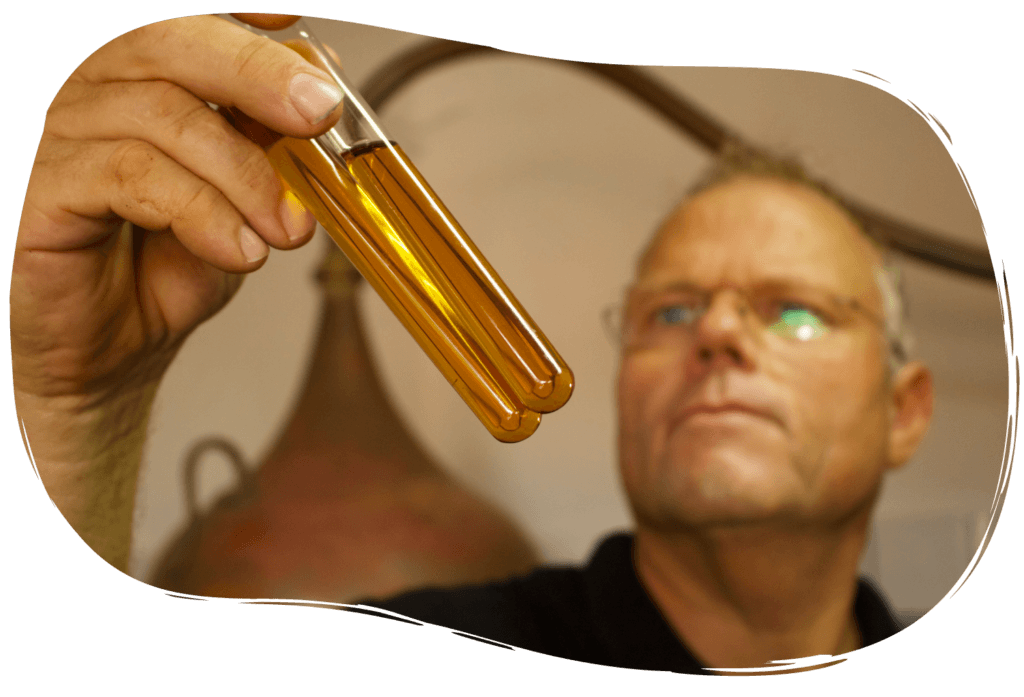
Trial and Design
People often talk about trial and error. I prefer to call it trial and design. Mistakes are not failures if you understand them. They’re information.
In distilling, nothing is ever perfect from the first attempt. Fermentation behaves differently, barrels evolve in their own way, flavours surprise you. If you pay attention, those moments don’t weaken the process, they strengthen it.
Some of our liqueur recipes didn’t develop as planned, but they turned out delicious anyway. Some of our most distinctive products and techniques exist today because something didn’t go exactly according to plan.
The key is not avoiding mistakes, but learning how to turn them into better decisions. That’s how innovation happens. Making mistakes is part of the fun, it’s how you learn and move forward. There’s only one rule: don’t make the same mistake again and again. If you learn from it, it stops being a mistake and becomes part of the design.
That’s what trial and design means to me.
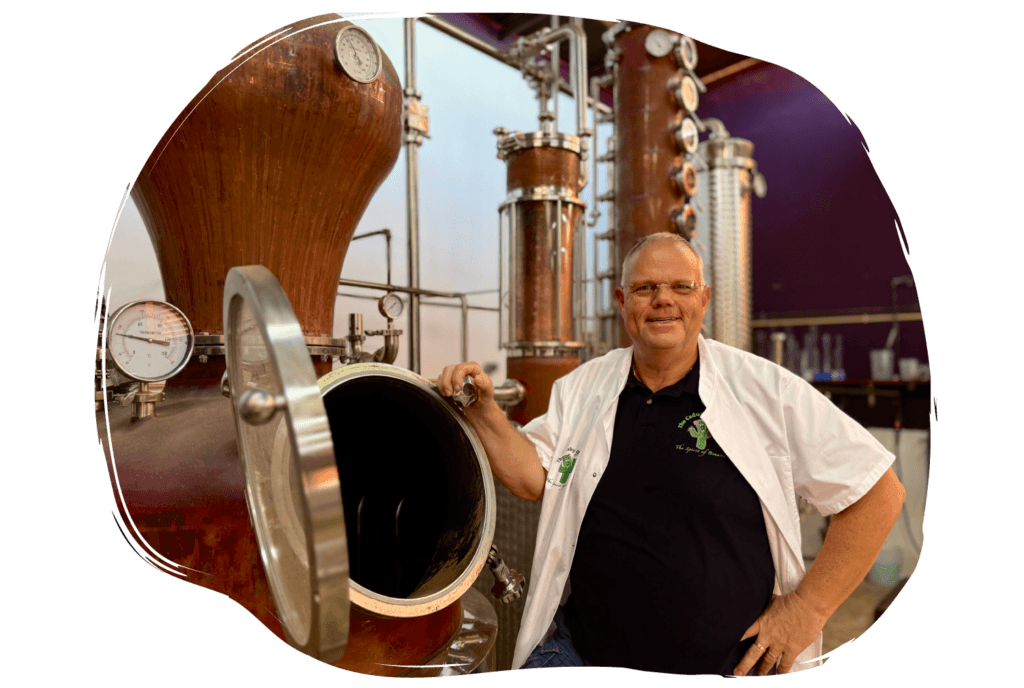
An Idea Is an Idea When It Is Realized
Especially in the early years, people would sometimes say to me: “I had that idea too.” My answer was always the same: “Great. Show me your product.” Most of the time, there was no product. No bottle. No label. No liquid. Just a thought. And that’s the difference.
An idea without action isn’t an idea, it’s a dream. Between having a thought and introducing a product to the market lies a long road of hard work. Research, testing, failing, learning, investing time, energy, and responsibility. That’s where most ideas disappear.
Cadushy wasn’t built on ideas alone. It was built by doing. By turning concepts into liquid, stories into bottles, and dreams into something you can taste.
For me, an idea only becomes real when it’s realized. Everything before that is just potential.
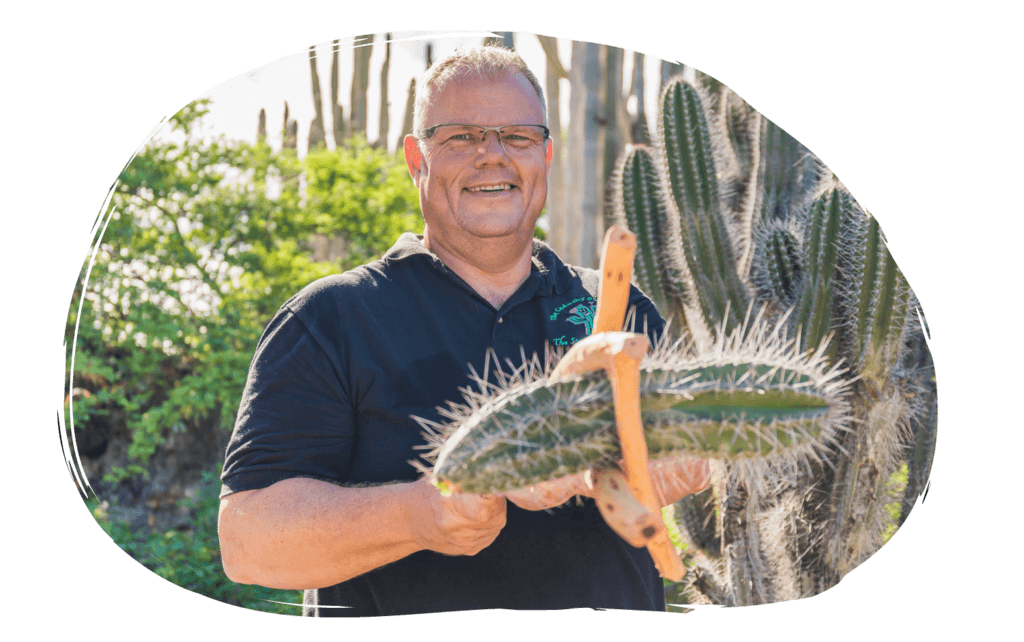
Quality Before Quantity
We never design our process around volume. We design it around flavour, balance, and integrity.
Almost always, that means producing less. Less output, fewer bottles, and sometimes longer waiting times. Not because we can’t produce more, but because producing more would force compromises we’re not willing to make.
Spirits don’t care about deadlines, and neither do we. Fermentation takes the time it needs. Barrels mature at their own pace. Flavours don’t rush just because a calendar says so. Quality has its own rhythm, and we choose to follow it.
As a small distillery, we can’t and don’t want to compete with big producers on quantity. That’s not our game. Let them do the quantity. We do the quality.
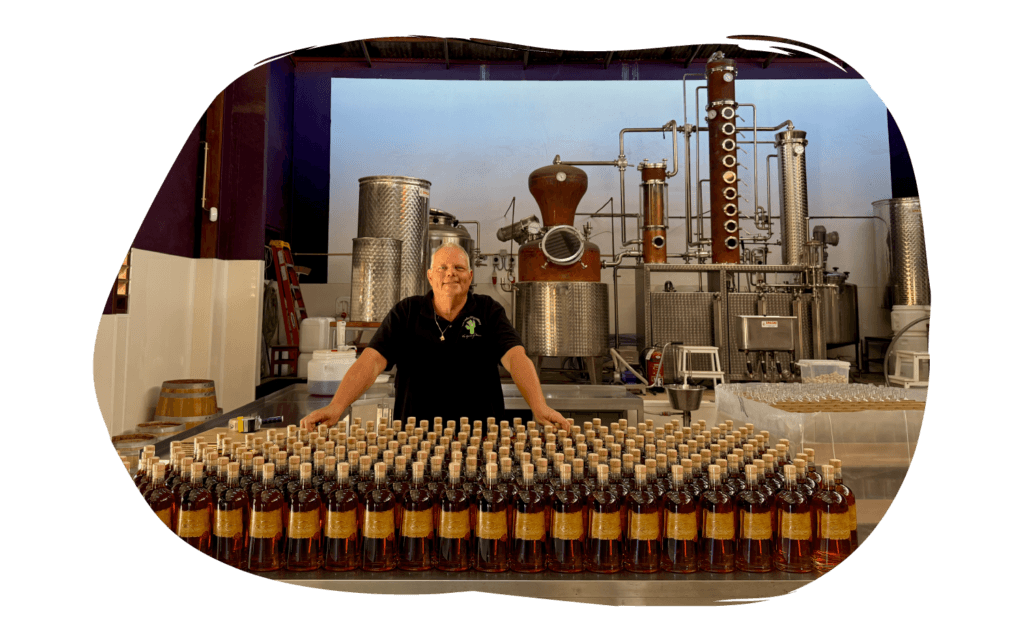
“It Can’t Be Done”
If others say “it can’t be done,” that’s usually the moment I become interested.
Many innovations don’t fail because they’re impossible. They fail because people stop too early. Because something is difficult, unfamiliar, or doesn’t fit existing rules. I’ve never been very good at accepting that as an answer.
At Cadushy, some of the things we do were considered unrealistic, impractical, or simply unwise. A distillery in Rincón… never-before-used ingredients… a Caribbean Whisky… We did them anyway.
Not to prove anyone wrong, but to prove that curiosity, persistence, and craftsmanship still matter. When you combine experience with the willingness to try, limits start to move.
Progress doesn’t come from repeating what already exists. It comes from daring to do what others say can’t be done, and then doing it properly.
Living the Brand
I built Cadushy on the principles of my master’s dissertation, Living the Brand.
The core idea is simple, but powerful: your corporate brand should not just be something you communicate outwardly. It should be the guiding principle for your team, your culture, and your leadership.
A brand only becomes real when it is lived every day. In the way people work together. In the choices they make when no one is watching. In how guests are welcomed, how mistakes are handled, and how quality is protected.
At Cadushy, the brand is not owned by marketing. It’s owned by the entire team. Our values, our tone, our way of working, and even our sense of humor (or the lack of it 🙂 all flow from the brand. Leadership is about setting that example and protecting the culture that allows the brand to stay authentic.
When people understand the brand and feel part of it, they don’t need strict rules for every situation. They make the right decisions naturally, because they know what Cadushy stands for.
That’s what Living the Brand means to me. Not managing people through processes, but guiding them through purpose.
These principles are not rules carved in stone. They are guides. They evolve as we learn, as the team grows, and as the company moves forward. But they give direction when choices are not obvious and shortcuts are tempting.
Craft, quality, and leadership are never separate. The way you think shapes the way you work. The way you work shapes what you create. And what you create ultimately reflects what you stand for.
At Cadushy, we don’t chase perfection, volume, or trends. We try to make honest decisions, respect the process, trust experience, and stay curious. If we do that well, the rest follows naturally, and we have fun every day. And in the end, that’s what matters most to me.
Eric Gietman